
Why Profitable Companies Run Out of Cash

A retailer I worked with was going broke while sitting on a pile of assets.
On paper the business looked healthy. The P&L showed a profit. The shelves were full of inventory. His accountant had just told him he'd had a good year.
Then he'd log into the bank account and there wasn't enough there to cover next week.
He couldn't understand it. Profitable companies aren't supposed to run out of money. Except they do, all the time, and here's the short version of why.
Profit is an accounting conclusion. Cash is the money actually in the bank. Those are two different numbers, and the gap between them is where healthy-looking companies quietly bleed out.
How can a company be profitable and still broke?
That retailer's "profit" was sitting on his shelves.
He'd bought inventory with real cash, and until it sold, that cash was gone. The balance sheet called it an asset. His bank account called it missing.
Assets aren't profit. Say I buy a gold coin for $200 and a year later it's worth $4...
Why Your Business Needs a Cash-First Operating System
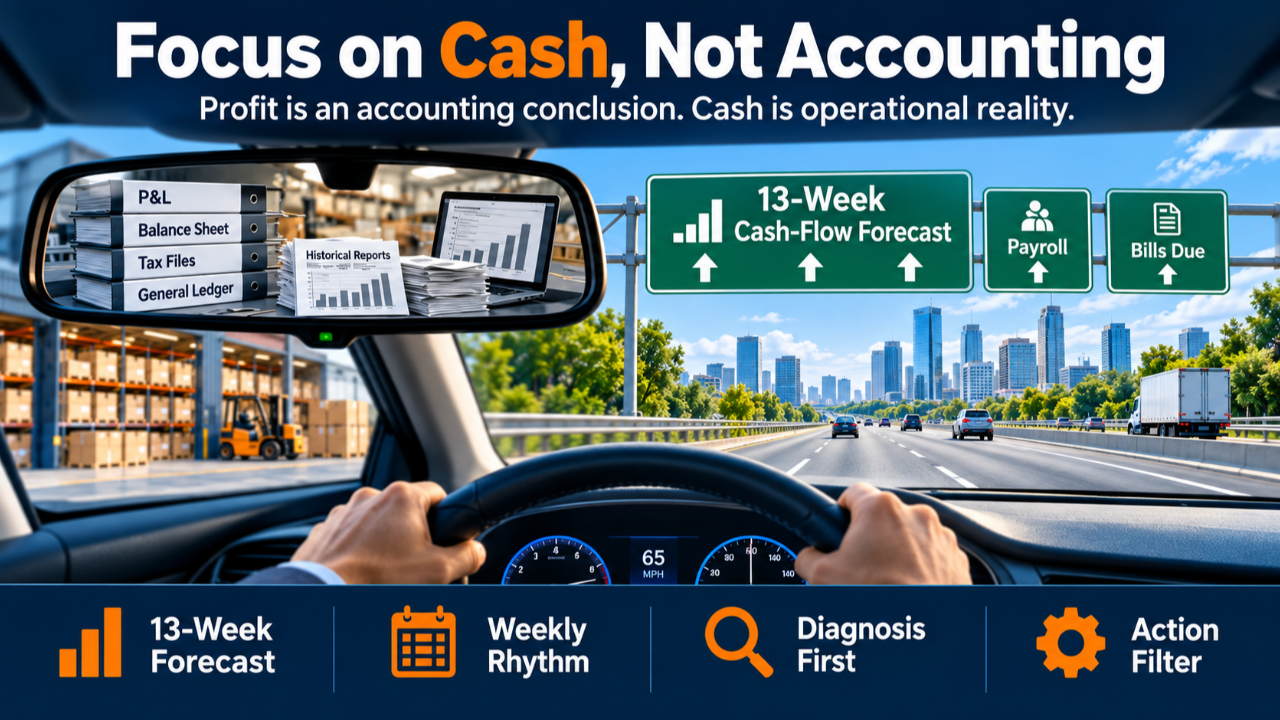
The retailer had clean books, shelves full of inventory, and financial statements that looked fine. The business was going broke anyway.
The statements were accurate. They answered a different question than the one keeping the owner up at night: will there be enough cash to make payroll on Friday?
That gap shows up everywhere. A service company needs 60 to 90 days of capital for every sale it makes. A manufacturer can't make enough of its best product while its margins keep shrinking. Different industries, same pattern. The reports look backward, and the owner needs to see what's coming.
Your financial statements were built for someone else
Your P&L and balance sheet are generally prepared under GAAP. That's the right standard for their job, which is satisfying compliance, lenders, and tax requirements.
They were never designed to tell you whether payroll clears this Friday.
So the reports and the bank account can tell 2 different stories. A company can show a profit while cash b...
